
General operational information only. Payer, state, contractual and regulatory requirements vary. Confirm current requirements with the applicable payer or agency.
Quick answer
What practice leaders need to know
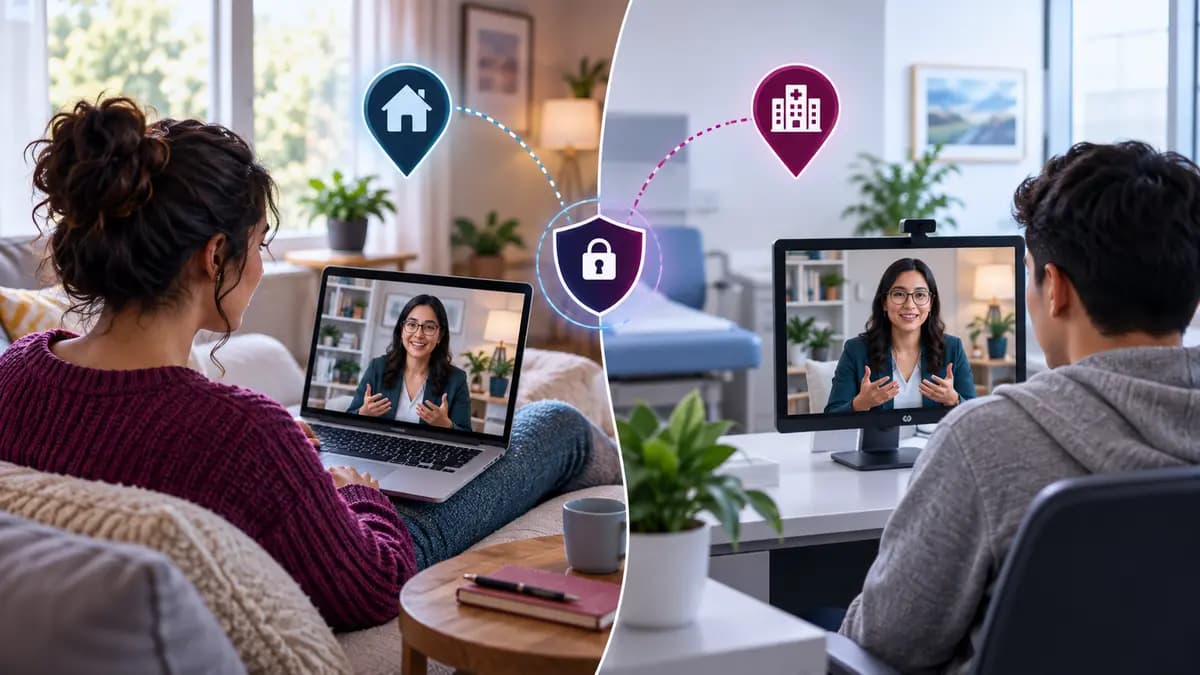
Use POS 10 when the patient receives telehealth in a private residence that meets CMS's definition of home. Use POS 02 when the patient receives telehealth somewhere other than home. The patient's location at the time of service controls this choice, not the provider's location.
POS 02 means the patient was not at home
CMS defines place of service 02 as telehealth provided other than in the patient's home. The service is delivered through telecommunications technology while the patient is located in another setting. The provider's office location does not determine whether POS 02 or POS 10 is reported.
POS 10 means the patient was at home
CMS defines POS 10 as telehealth provided in the patient's home. The home is a private residence rather than a hospital or another facility where the patient receives care. The practice needs a reliable way to capture the patient's location for the date of service.
Payment and coverage still depend on the payer
The POS code identifies the setting, but it does not by itself establish coverage. Medicare and other payers may apply different telehealth eligibility, provider, service, modifier and payment rules. CMS instructs providers to check individual payer reimbursement policies for place-of-service reporting.
Build location into the visit workflow
Ask and document where the patient is physically located at the time of the telehealth encounter. Make the information available to the clinician and billing team. A default POS based only on appointment type can be wrong when the same patient sometimes connects from home and sometimes from another location.
Audit the connected claim fields
Review the POS together with the service code, modifier, provider enrollment, licensure, patient location and payer policy. When denials cluster around telehealth, separate coverage problems from coding, enrollment and location-capture issues before changing the workflow.
Use the patient's actual location
A patient connecting from a private residence generally points to POS 10 under the CMS definition. A patient connecting from a school, clinic, workplace or another non-home location generally points to POS 02 for an otherwise eligible telehealth service. Do not determine the POS from the clinician's office, home or remote-work location. Ask the patient at each encounter because the location can change between visits.
Connect POS with modality and service eligibility
The correct POS does not make an otherwise ineligible service payable. Confirm that the service is on the applicable payer's telehealth list, that the provider type and licensure support the encounter, and that the required audio-video or audio-only modifier is reported when applicable. CMS's current professional billing guidance distinguishes POS 02 and POS 10 and also addresses appropriate telehealth modifiers.
Behavioral health workflows need reliable location capture
Behavioral health patients may connect from home, a group setting, a treatment program, a school or another site. Add a simple location question to check-in and place the answer in a field visible to the clinician and billing team. If the patient is traveling or located in another state, route the encounter for any necessary licensure and payer review before billing.
Temporary locations should be reviewed, not guessed
A patient may connect from a hotel, a relative's residence, a workplace parking area or another temporary setting. Capture the actual physical location and enough context to compare it with the payer's definition. If staff cannot determine whether it qualifies as the patient's home, pause claim release and review current guidance. The same information can also affect licensure, emergency planning and coverage. A two-choice scheduling default is not enough for every real-world telehealth encounter.
Keep the POS rule separate from the telehealth modifier rule
The place-of-service code describes where the patient received the service. A telehealth modifier may describe the technology or another aspect of delivery. These fields answer different questions and one does not replace the other. Build the claim rule from the service code, patient location, modality, provider type and payer policy together. When a payer changes its telehealth instructions, update the effective date in the payer matrix and test the new configuration before applying it across all claims.
Confirm location at the start of every encounter
Scheduling information may be outdated by the time the visit begins. Ask the patient to state the physical address or location at check-in or when the clinician connects, according to the practice's approved workflow. Make the answer available for emergency planning, licensure review and billing without placing unnecessary sensitive details in widely visible notes. If the location cannot be confirmed, define who decides whether the visit can proceed and whether claim release must be held. A recurring appointment should not automatically reuse the prior visit's POS because the patient may connect from a different setting.
Separate the patient location from the provider location
POS 02 and POS 10 describe the patient's setting for the telehealth service under the CMS definitions. The clinician may be in an office, home or another approved site, but that fact does not switch a patient-at-home encounter to POS 02. The provider's location still matters for licensure, enrollment, privacy, employer policy and other operational requirements, so capture it through the appropriate workflow rather than using it to choose between these two POS codes. Train staff on the distinction and audit claims where scheduling and billing records appear to use different location concepts.
Review state and licensure dependencies
A patient's physical location can determine which state's professional-practice rules apply. When a patient travels or permanently moves, route the encounter for current licensure and practice review before assuming the clinician may provide care. Interstate compacts, temporary permissions and payer rules have their own eligibility and conditions and should be verified through authoritative sources and qualified compliance guidance. The POS code does not resolve licensure. A technically correct POS 02 or POS 10 claim can still involve an impermissible or unenrolled provider-patient location combination.
Verify Medicare rules for the date of service
CMS telehealth policies, covered-service lists, modality rules and statutory flexibilities can change. Check the official guidance that applies to the date of service, provider type and service rather than relying on an older pandemic-era workflow or a future effective date. Record the source and last-reviewed date in the payer matrix. POS selection is only one claim field; confirm service eligibility, patient setting, originating-site considerations where applicable, modifiers and documentation. When policy changes, test the complete claim rule and communicate the effective date to clinical, scheduling and billing teams.
Maintain payer-specific telehealth instructions
Commercial and Medicaid plans may adopt, modify or reject aspects of Medicare reporting and can distinguish products within the same payer. Build a matrix with payer and product, eligible services and providers, patient-location requirements, POS, modifier, modality, authorization and effective date. Link to the official source and assign an owner. Do not turn one paid claim into a universal rule or assume a clearinghouse edit proves coverage. When instructions conflict, obtain clarification and retain the reference before changing a broad system default.
Document modality and clinical support
The record should support the service furnished and include the information required under applicable clinical, payer and regulatory rules. Capture whether the encounter used audio-video or audio-only technology when relevant and apply the current modifier requirements. Document patient identity, consent and location according to policy, while avoiding templated statements that were not actually confirmed. The appointment duration by itself does not establish the reported service. Qualified clinicians and coding professionals should resolve uncertain service or documentation questions; billing staff should not rewrite the clinical record to make a telehealth claim fit.
Build safe emergency and privacy workflows
Telehealth operations need a current patient location and emergency contact process because the clinician and patient are not together. Establish what staff do when immediate local assistance is required and how location information is shared securely with those who need it. Confirm that the technology and environment support privacy and that vendors handling protected health information are reviewed appropriately. These safeguards do not determine POS, but they use the same location fact and should be designed together so staff are not asked to collect conflicting answers in separate systems.
Test system defaults and claim edits
Review whether the scheduling system, EHR and billing platform default all virtual visits to one POS. Configure the safest available prompt or hold so patient location drives the claim rather than appointment type. Test home, non-home and missing-location scenarios for representative payers. Define which staff may override the result and require a reason. Monitor overrides and telehealth rejections or denials by payer, service and location. A useful edit catches a missing or inconsistent location before submission without silently replacing staff judgment with an unverified default.
Audit denials before changing the POS
When a telehealth claim denies, review the payer response, patient location, service, modifier, provider enrollment, licensure, authorization and policy effective date. Do not switch POS 02 and POS 10 merely to obtain payment when the original claim accurately reflected the encounter. Determine whether the payer expected a correction, appeal or other action and preserve the history. Group repeated outcomes to identify outdated payer instructions or configuration. A denial does not prove the POS was wrong, and a paid claim does not prove every element was correct.
Working reference
POS 02 and POS 10 selection guide
Capture the patient's location for every telehealth date of service, then confirm payer coverage, modifier and provider requirements.
| Patient location | Likely POS | Billing review |
|---|---|---|
| Private residence that meets the home definition | POS 10 | Confirm eligible service, modality, modifier and payer policy |
| School or workplace | POS 02 | Confirm the setting is not the patient's home |
| Clinic or other healthcare setting | POS 02 | Review originating-site and payer-specific requirements |
| Temporary lodging or uncertain setting | Needs review | Compare the facts with the current CMS definition and payer instructions |
| Location not documented | Do not guess | Obtain and document the patient's actual location before claim submission |
Common questions
Questions practice teams ask
Is POS based on where the provider is located?
No. POS 02 versus POS 10 is determined by the patient's location when the telehealth service is delivered.
Is POS 10 used for every remote behavioral health visit?
No. Use POS 10 only when the patient is in a location that meets the applicable definition of home.
Does POS 10 guarantee the service is covered?
No. Coverage also depends on the service, provider type, modality, modifier, enrollment and payer policy.
What if the patient connects from a school?
That is generally a non-home setting, which points to POS 02 for an otherwise eligible telehealth service.
Should the location be asked only during intake?
No. Confirm it at each telehealth encounter because the patient's location can change.
Primary references
Sources and further reading
Requirements can change. Use these primary sources to confirm the current rule that applies to the payer, service and date of care.
Ready to turn this guidance into action?
Tell us what is happening in your practice, and we will help you identify the most useful next step.